

Bulletin of Electrical Engineering and Informatics
 Open Access Journal


Authors must prepare their manuscripts in accordance with the Guide for Authors using the official Microsoft Word template or LaTeX template. Before submission, authors are strongly encouraged to review the Submission Checklist and ensure that all requirements have been fully satisfied. Adherence to the journal's formatting and submission guidelines helps expedite the editorial assessment, peer-review process, and publication. Manuscripts that do not comply with these requirements may be returned to the authors for revision or declined without external review.
The editorial team is committed to maintaining the highest standards of research integrity, publication ethics, transparency, fairness, and academic excellence. Submitted manuscripts must present original, unpublished work that is not under consideration by any other journal or publication venue. All submissions undergo an initial editorial screening followed by a rigorous peer-review process to evaluate their scientific quality, originality, technical soundness, relevance, and ethical compliance. Editorial decisions are made objectively, independently, and without discrimination or conflicts of interest, in accordance with internationally recognized principles of scholarly publishing.
Announcements
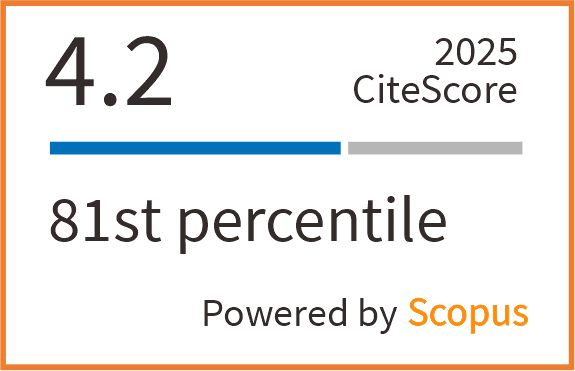
Understanding Scopus Metrics: CiteScore Q1 and SJR Q3 of BEEI |
|
| The Bulletin of Electrical Engineering and Informatics (BEEI) is indexed in Scopus, where journal performance is assessed using several complementary metrics. Because each metric employs a different methodology, a journal may receive different quartile rankings depending on the evaluation system. BEEI is currently ranked: - Q1 based on Scopus CiteScore; and - Q3 based on the SCImago Journal Rank (SJR). |
|
| Posted: 2026-07-23 | More... |
Policy on Multiple Submission (Simultaneous Submissions) and Prior Publication |
|
Dear Authors, The Institute of Advanced Engineering and Science (IAES) and Intelektual Pustaka Media Utama (IPMU) are committed to upholding the highest standards of academic integrity and publishing ethics. To ensure transparency, fairness, and responsible dissemination of research, we require all authors to adhere to the following policy regarding multiple submissions and prior publication: Originality and Prior Publication
|
|
| Posted: 2025-11-05 | More... |
| More Announcements... |
Bulletin of Electrical Engineering and Informatics (BEEI)
ISSN: 2089-3191
,
e-ISSN: 2302-9285
This journal is published by the
Institute of Advanced Engineering and Science (IAES)
.